Once upon a time, about a decade and a half ago to be more precise, I reviewed a small point-and-click adventure game called Machinarium, developed by a small Czech company called Amanita Design. I don't have the time nor the patience to translate my old article, but it's sufficient to say that it was written in a certain cultural context; in which I was frustrated with the technology at that time and how it was turning out1; where this little game was a breath of fresh air, with carefully designed art, beautiful music and a gameplay unlike anything else that I could play in the year 2010, save for maybe a few other Amanita games. Meanwhile the world has changed quite a bit, and I with it, and I must admit that my last playthrough of Machinarium did not end, which led me to conclude that well, maybe I've changed too much and I don't have the patience to play this sort of games anymore. Which is fine, except I've now decided to play Amanita's latest, released at the end of May, 2026.
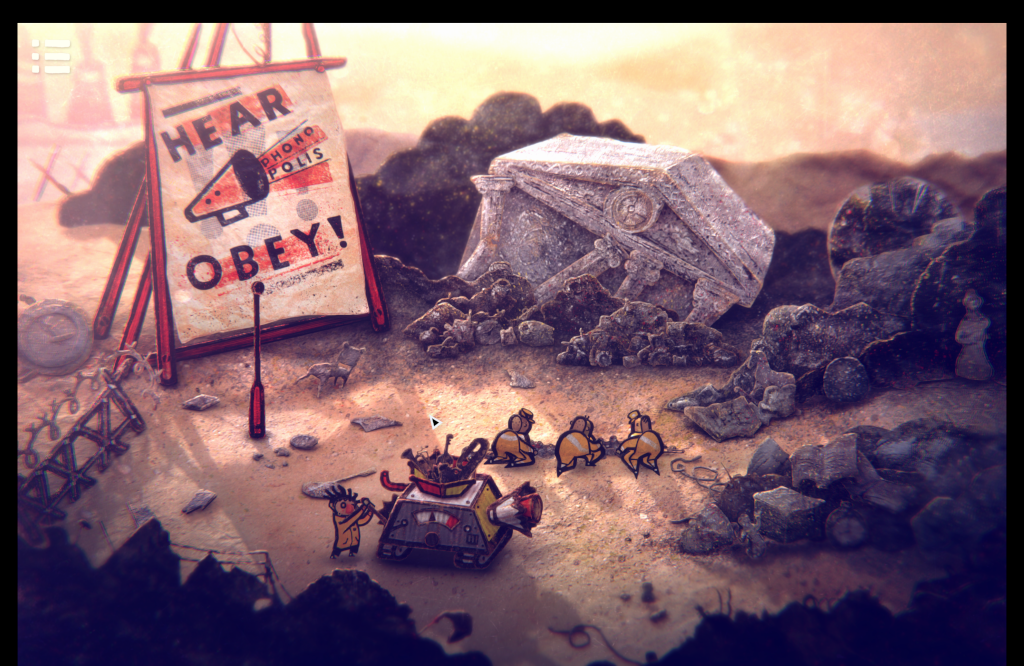 Phonopolis is, just like Machinarium, a little game developed by the same company, also a point-and-click, also linear and also driven by puzzle and story alike. However, unlike Machinarium and other Amanita games, such as the Samorost series or Botanicula, this one has way more... let's call it production value, in the form of a narrator, that is also the voice of the main character himself, a boy named Felix.
In Phonopolis, the player unfolds the story of Felix's rise from a mere garbage collector to the saviour of Raquel, a singer with the power to enchant the souls of her audience, who is held hostage by... well, who else other than the Bad Guys (tm). Two remarks are in order with respect to this storyline.
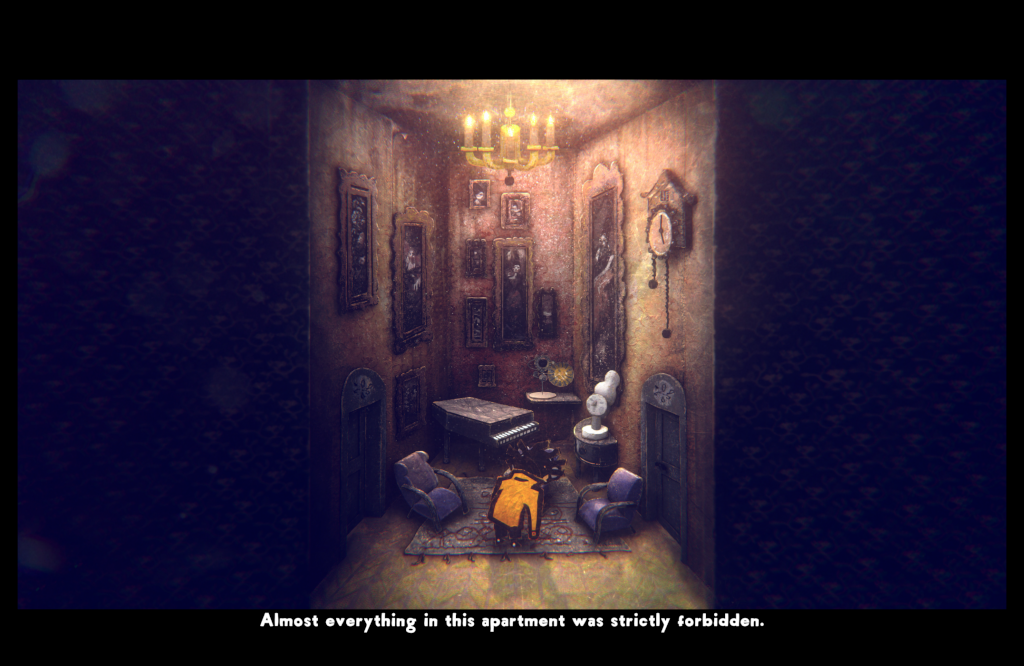 The first observation is that, as the title suggests, music, and sound itself, plays an essential role in the universe of Phonopolis, and the antithesis between consonance/music (Raquel) and dissonance/shouting (the Leader, the Absolute Tone) lies at the core of our hero's bildungsjourney. Furthermore, our hero is guided, or perhaps misguided, by a trio of composers who, although supposedly make up a band, keep (dissonantly) bickering about whose composition is the one to prevail.
The second observation is that the premise of the story, that of a city ruled by an "authoritarian Leader" who is, of course, basically Putin, relies on what today seems to have become an empty trope, that manages to keep the subject exactly at the place where it was in, say, We, a story written, mind you, about a century ago. This unfortunate misframing leads me to reinterpret the story as I see fit, which won't take me much, and thus I will proceed to do. So bear with me.
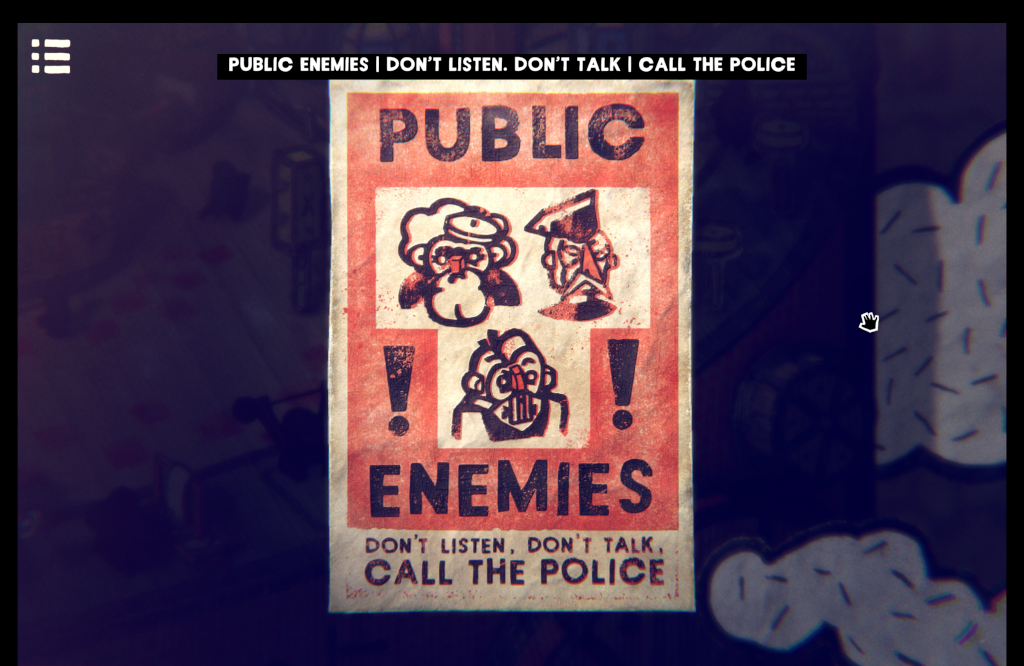
 The main evil character in the whole story is, to my eye, the totality that makes up the NPCs, and if anything, the entire satire is meant to laugh at them first and foremost. Just look at them: a bunch of folks who will do literally nothing unless someone barks orders at them. As a result, the whole mechanical approach is an exercise in madness if you ask me, yet the Leader tries to make do with the people he has rather than the people he'd like to have, and of course, the whole system crumbles at the end, as this is what systems eventually tend to do. Thus Felix is not just a freak accident; he is a systematic crack in the system, who by accident discovers that he can put a pair of headphones in his ears and disregard the barking orders. As a result, he gets smarter, or at least smart enough to topple an order of things that was already well on the way to failure, and at the very least smart enough to leave the pigsty that is Phonopolis. In all other respects, he is a fool, just like all the other dystopian heroes. Perhaps the only endearing aspect of this story is that he's our fool.
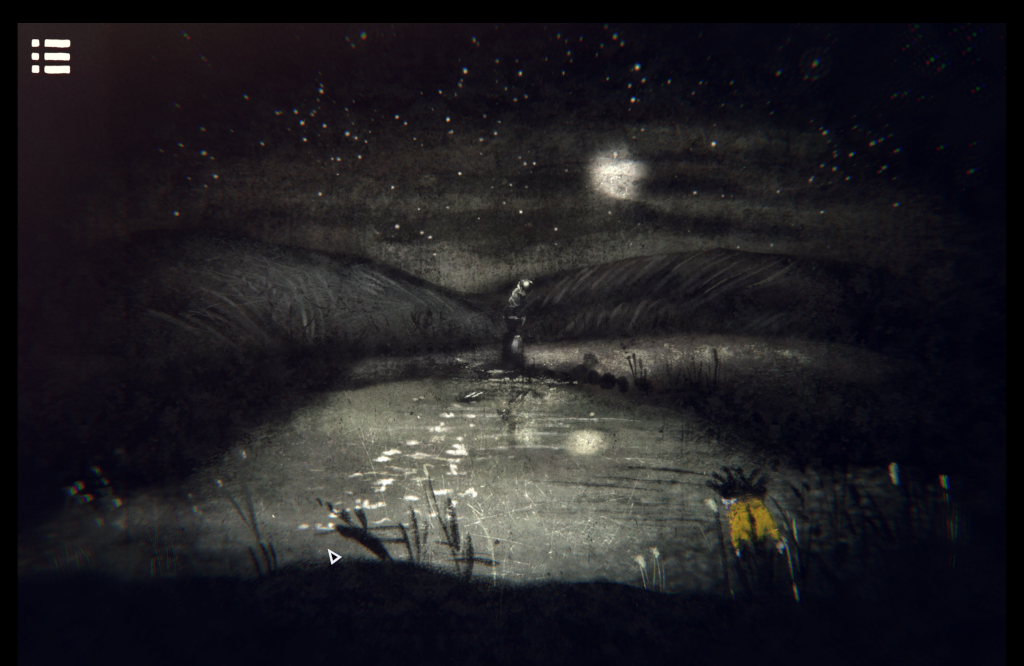
 Story aside, Amanita Design are artists first and foremost; and thus the visual section of the game is absolutely superb, and the music, written for the most part by Tomáš Dvořák aka Floex is something to remember. If there's one thing that I could put my finger on as being absolutely stunning, that was the dream sections, which have something Lynchian about them if you ask me. The level design is also fine, if a little simplistic for my taste; but I suppose that the game was designed with a younger audience in mind, so if you have kids who like puzzles, make no mistake, they will most likely devour this. I know I would, were I the kid who stumbled upon Machinarium in 2010.
But that's not to say that I can't appreciate the work that these guys have put into it in 2026. The silver lining to my gaming technology rant is that there are more of these artsy games popping up here and there and I guess I will add them to my list of games as I find them.
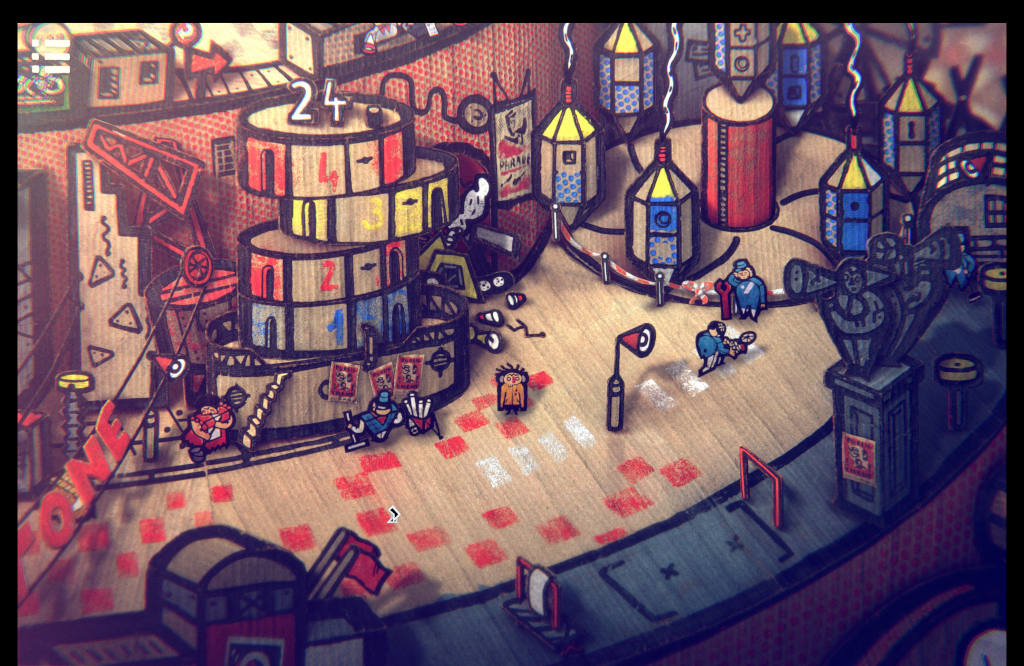
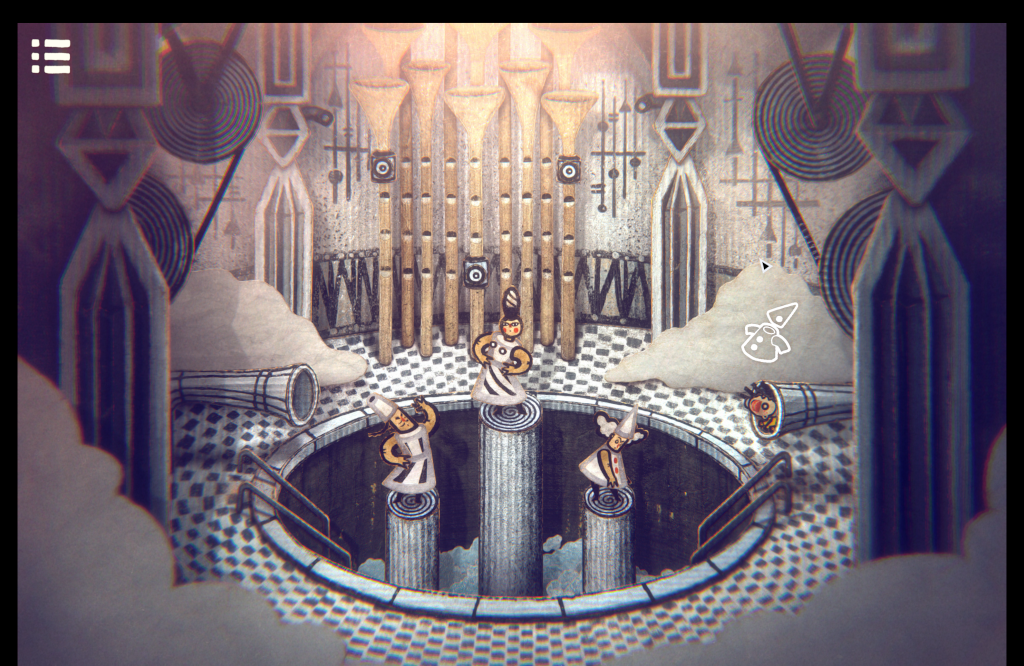
-
Little did my naïve self know that as the years went by, it would turn out yet worse from certain points of view. ↩
And thus more games are added to my, ah, monotonically increasing to-play list. Although since you mentioned sound plays a key part in the story, this reminded me of Loom, so I'd better revisit that first
Hm, now that you mentioned it, I need to review Loom (tm) sometime, it's been quite a while since I played it.
Loom is based. It was my first contact, I think, with Tchaikovsky's genius music. You better download it and store it safely in the Templar Archives. Maybe they'll ban it someday. Can't have music composed by a russkie, that's bad, dontcha know :D
Heh. I used to know someone named Tchaikovsky.
This cannot be a coincidence, can it?