Holy smokes, I can't believe it's 2026 and I haven't reviewed this yet! Sanitarium is a superb point-and-click adventure developed by DreamForge Intertainment, a small company active through the 1990s, that made mostly DOS-based role-playing games besides this one, plus a turn-based Panzer General clone set in the Warhammer 40K universe, and another adventure game written by Roger Zelazny and voiced by Ron Perlman (of Fallout 2 and The City of Lost Children fame) and Brent Spiner (of Star Trek TNG fame) -- perhaps I should also review this one sometime. On the business front, Sanitarium was published by a company called ASC Games, who also published the first Grand Theft Auto game in the States.
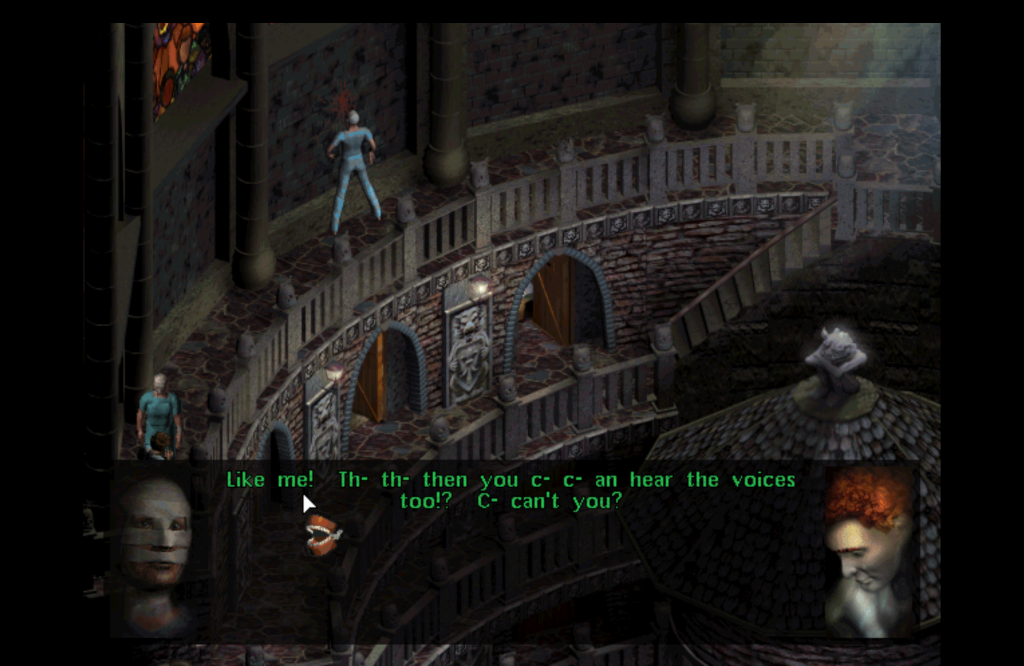 The premise of Sanitarium is obscure by design: the player is placed in the role of a man who survives a car accident, only to find himself without knowledge of who he is or any other sort of memory whatsoever, in what seems to be a mental institution. So far so good, only as the story starts to unfold, so does a bunch of nonsense which makes our hero wonder whether he is really going insane; and as that goes on, his memory also starts to slowly come back, and piece by piece, everything starts to fit together in what seems to be a carefully-crafted yet eerily twisted puzzle. That's really all there is to it as far as the story goes, if we don't count the spoilers -- the authors' masterful craft lies however in the way said story is pieced together, by means of allegory and metaphors, as if Lynch himself had tried to de- and reconstruct the psyche of a very troubled man. This alone makes Sanitarium unique.
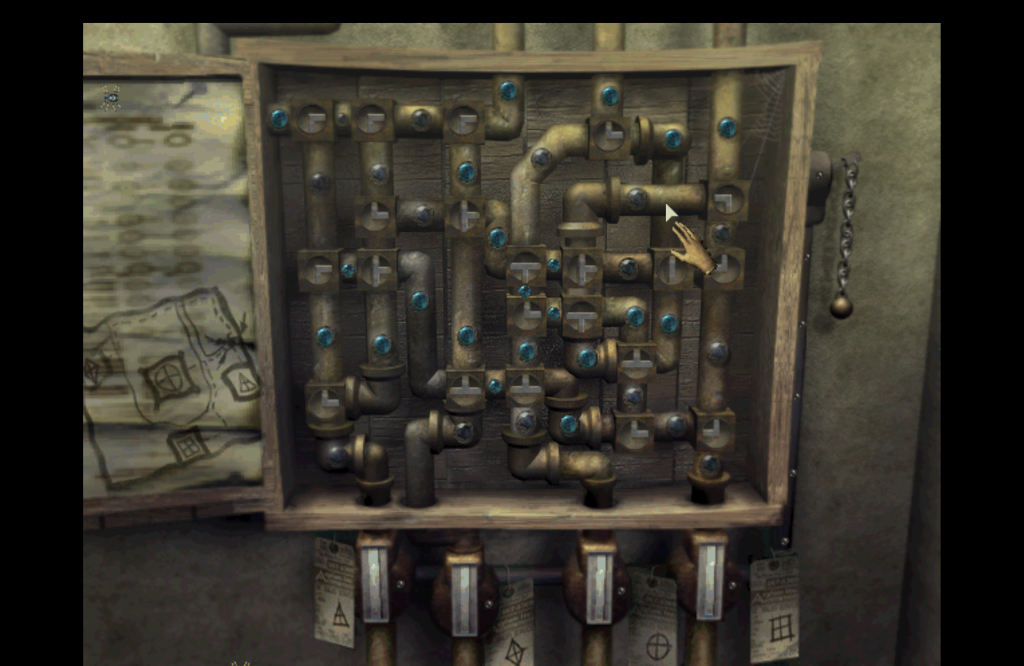
From a game design perspective, this is standard 1998 adventure material, maybe not as good as Grim Fandango -- which, coincidentally, was launched the same year -- but certainly to the level of I Have No Mouth, and I Must Scream or even above it, and perhaps a sort of spiritual successor. As in most point-and-click adventure games, the puzzles usually make sense, except some of them really don't, and it's up to the player to lose an hour or two (or pop up that walkthrough) to figure things out. I myself haven't found it too frustrating, but this was my third playthrough, coming after a long break from this game. I don't know about you, but I find this type of gaming quite refreshing, in light of all the ultimately fruitless attempts to make computer gaming more palatable for the masses.
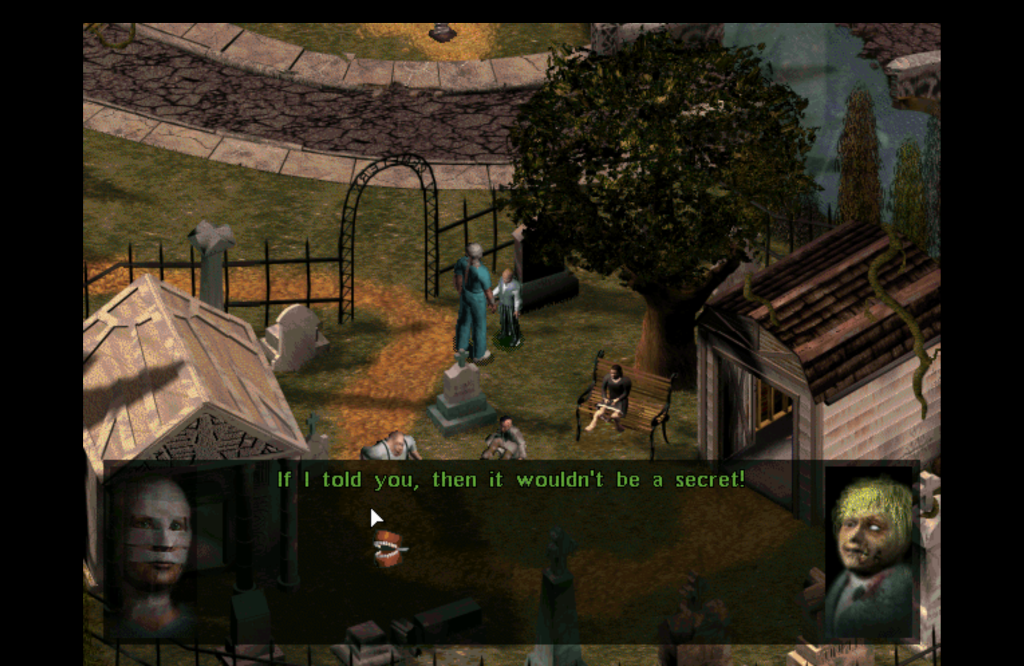 My first playthrough of Sanitarium occurred more than two decades ago, and my second one maybe fifteen years or so back, so I don't remember how I perceived it from a usability perspective back in the day, but nowadays I believe it sorta sucks. The interface is intuitive, but the whole "hold the right mouse button to move" thing makes the game an exercise in frustration, especially when you're doing timed puzzles; good thing there's only about three of them in the entire game.
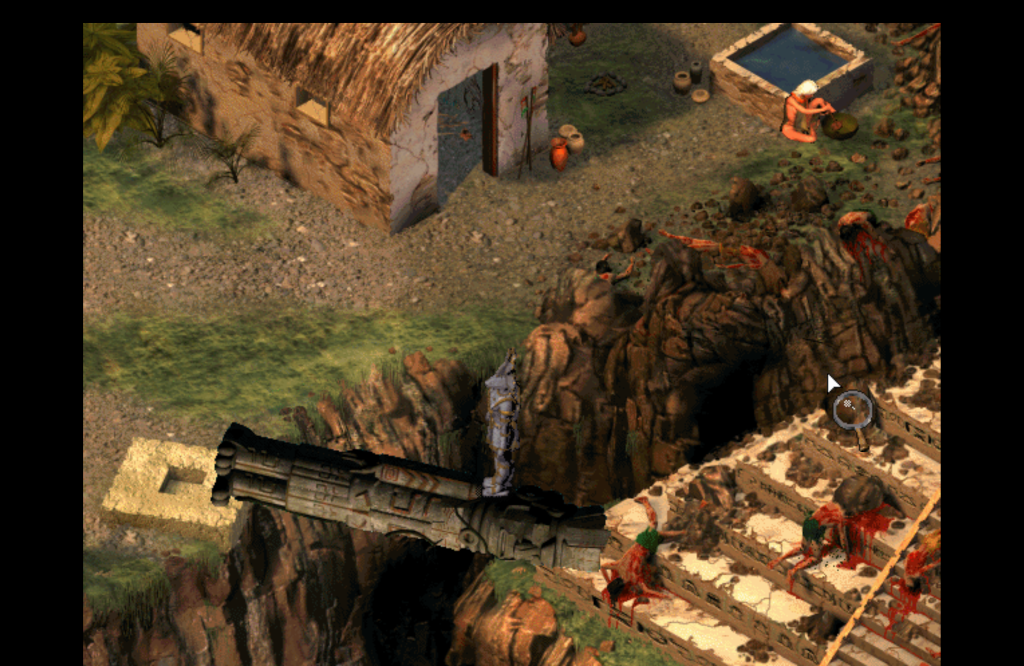
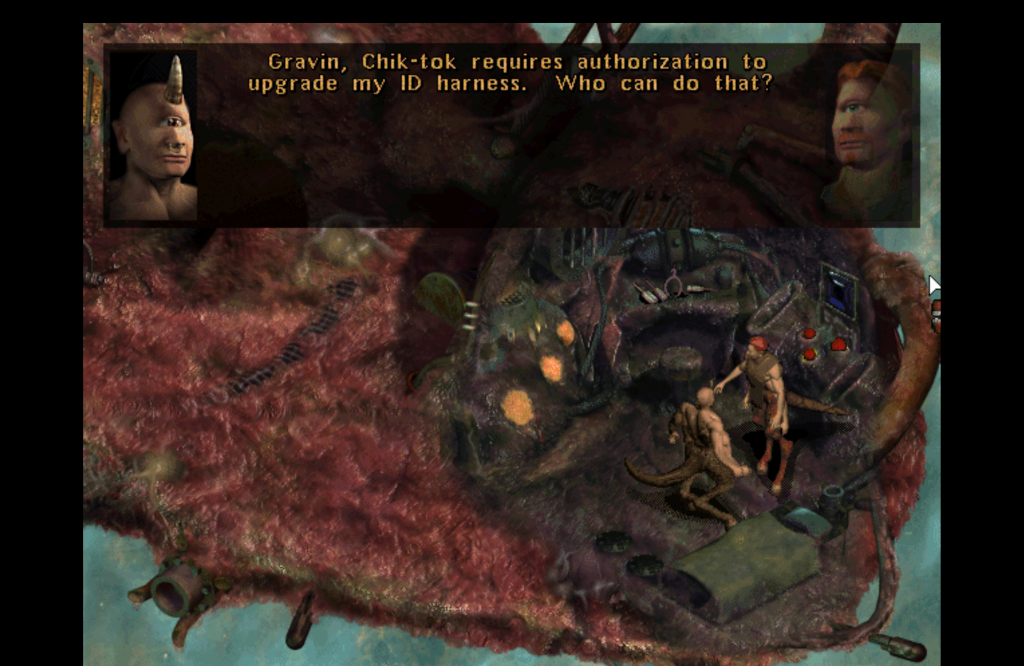
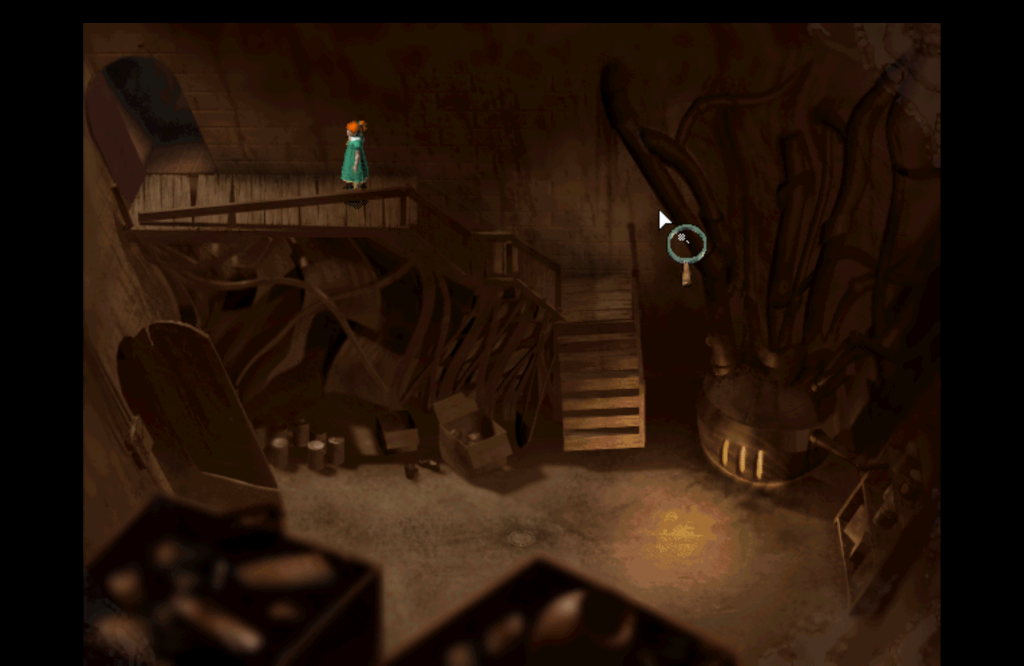
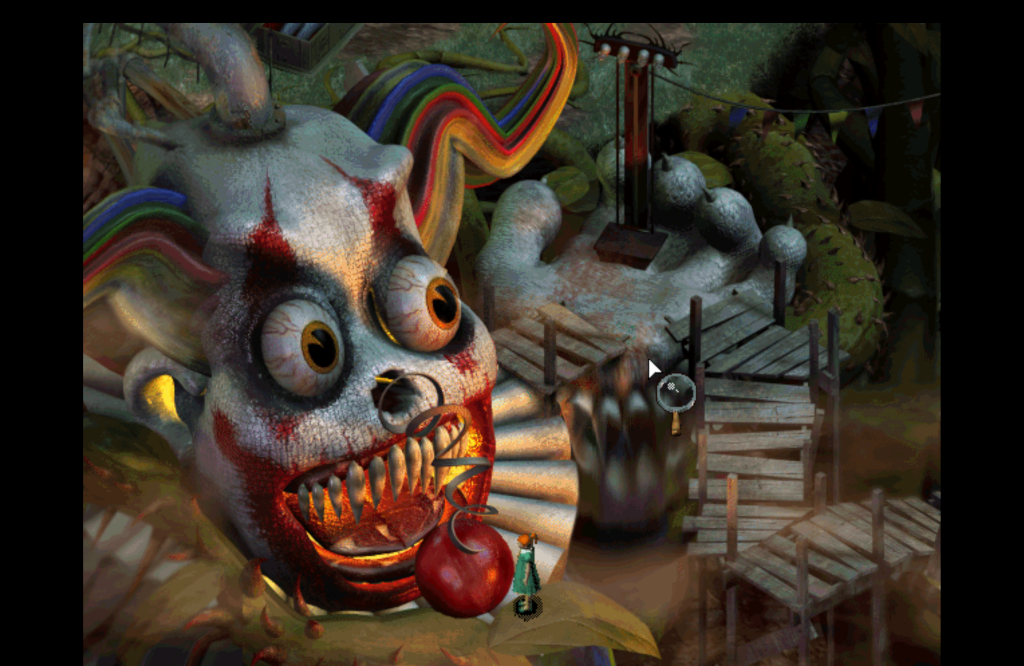 On the artistic side: the music has a few memorable moments, though it consists mostly of background atmospheric work; the voice acting isn't actually bad at all for such a low-budget game; and the graphics are made up of beautiful pre-rendered 3D images, quite typical of the late '90s1. I grew up with this stuff, so most likely I'm subjective, but I think that this style, devoid of pretense to actual realism, has its own charm that is irreplaceable, and which shall thusly remain a byproduct of an era when one could game without resorting to such sophisticated means as expensive and overheating silicon.
 What else can I say... I loved Sanitarium way back when I first played it, just as I did last weekend, just as I expect I'll do in 2046. The GOG version comes wrapped in a ScummVM which works almost perfectly on any modern system. Make sure to get it before the rights to the game get transferred to some well-meaning institution that decides to release the "enhanced" version.
-
For comparison, look at Diablo, the first two Fallout games and Starcraft, and you'll notice a similar art style. This was the era of late VGA, when animated rasterized setups were an easy technical achievement replacing low-resolution sprites on PCs, but dedicated graphic processors were yet unheard of in this environment. So I suppose the 3D rendering was performed on graphical workstations such SGI machines, then transported over to ye "standard" Windows machines to be integrated into the game. ↩
It's probably only fair to say, "Roger Zelazny (of general sci-fi and fantasy fame)" :) The character Seamus Zelazny Harper in Andromeda is named after him.
Completely fair. Although I would assume that the few and far between readers left (not counting the spambots and other assorted oddities) know who Zelazny is.
Luckily, you can count on assorted oddities such as yours truly always counting themselves among those few and far between readers. One cannot be so sure of the others, particularly the traditionally blue-eyed ones hailing from institutions claiming to "service" Romania. After so many years, even their eyes must wander. Perhaps they have left to check out younger blogs, with firmer, suppler paragraphs.
Otherwise... well, I can imagine the memo:
> Feb 17: commenter [redacted], alias Cel Mihanie, posting from IP address [redacted]; mentions name Zelazny (of general sci-fi and fantasy fame)
> Looked up internal SRI database for Zelazny sci-fi fantasy; zero hits; subject requires more research.